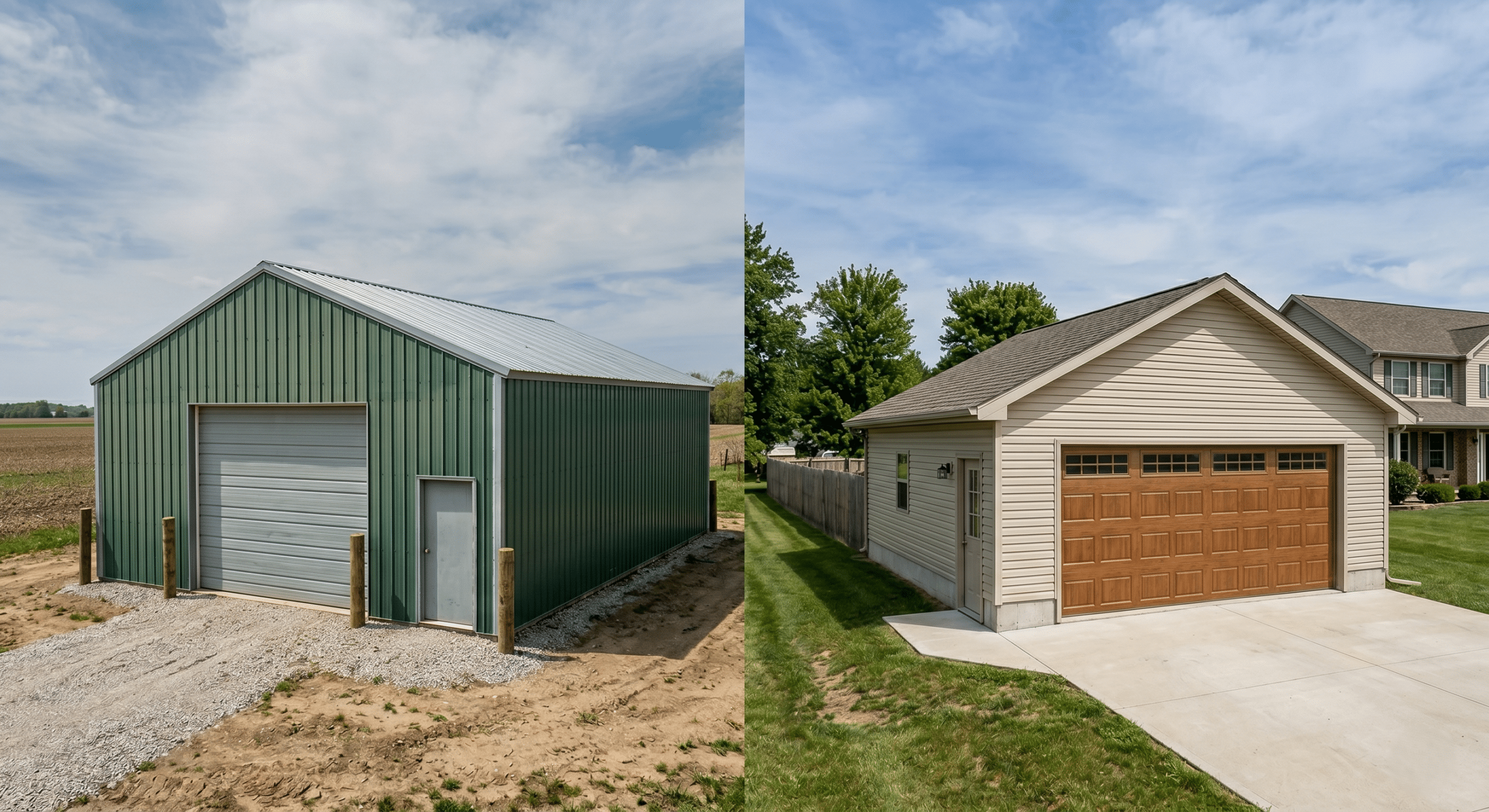
If you’re deciding between a pole barn vs traditional garage in Indiana, the best option depends on your intended use, property layout, and long-term goals. Pole barns are typically faster to build and offer large open spaces, while traditional garages provide conventional construction that may better match your home’s structure.
For homeowners in Decatur, IN and surrounding Adams County communities, understanding the structural differences and practical benefits of each option will help you make a confident investment.
What Is a Traditional Garage?
A traditional garage is built using standard stud wall framing and typically sits on a continuous concrete foundation. It may be attached or detached from the home and often matches the house’s exterior materials.
Common features include:
- Concrete slab foundation
- 2×4 or 2×6 wall framing
- Asphalt shingle roofing
- Insulated walls and ceilings
- Electrical wiring
- Finished interior drywall
Traditional garages are ideal for homeowners wanting architectural continuity with their home.
What Is a Pole Barn?
A pole barn (post-frame building) uses large vertical posts embedded in the ground or mounted to footings for structural support. Instead of load-bearing walls, the posts carry the structural weight.
Pole barns offer:
- Wide open interior spans
- Fewer interior support walls
- Flexible design layouts
- Efficient construction timelines
Internal link suggestion:
[Pole Barn Construction – https://wengerdimprovements.com/]
Structural Differences: Pole Barn vs Garage
Feature | Pole Barn | Traditional Garage |
Foundation Type | Post-frame | Continuous foundation |
Interior Layout | Wide open spans | Framed wall sections |
Construction Method | Posts support roof | Stud walls support roof |
Timeline | Generally faster | More framing time |
Design Flexibility | Highly customizable | Standard layouts common |
Both structures can be built to withstand Indiana weather — the key is proper engineering.
Which Is More Durable in Indiana Weather?
Indiana experiences:
- Heavy snow accumulation
- High wind gusts
- Hailstorms
- Freeze-thaw cycles
According to the American Wood Council, properly engineered post-frame buildings are designed to handle regional snow loads and wind conditions.
External resource:
[American Wood Council – Post-Frame Construction – https://awc.org]
Both pole barns and traditional garages can be durable — but structural integrity depends on quality construction and local code compliance.
Best Use Cases for a Pole Barn
Pole barns are ideal for:
- Equipment storage
- Agricultural use
- RV or boat storage
- Workshops
- Hobby spaces
- Large detached garages
If you need wide, unobstructed space, pole barns often provide greater flexibility.
Best Use Cases for a Traditional Garage
Traditional garages are better suited for:
- Attached structures
- Homes in subdivisions with HOA requirements
- Projects requiring matching architectural design
- Finished, insulated living space conversions
They are commonly chosen when aesthetics must closely match the home’s exterior.
Design & Customization Options
Both structures can include:
- Overhead garage doors
- Insulation
- Heating systems
- Electrical wiring
- Concrete flooring
- Storage lofts
Pole barns often allow easier expansion in the future due to their structural system.
Permits & Zoning in Decatur, IN
Most detached structures in Adams County require building permits. Requirements may depend on:
- Size of the structure
- Property zoning
- Electrical or plumbing installation
- Distance from property lines
Working with a local contractor ensures compliance with Decatur building codes.
Cost Considerations (Without Specific Pricing)
While pricing varies based on size, materials, and site preparation, pole barns are often chosen for larger-scale projects where open space is needed.
Traditional garages may require more extensive foundation and framing work, which can influence the overall investment.
The best way to determine which option fits your property is through an on-site consultation.
Long-Term Value Comparison
Pole Barn Advantages
- Flexible interior layout
- Efficient structural design
- Easier future expansion
- Excellent for rural properties
Traditional Garage Advantages
- Architectural consistency
- Ideal for attached builds
- Common for residential neighborhoods
The right choice depends on how you plan to use the space over the next 10–20 years.
Why Decatur Homeowners Choose Wengerd Home Improvements, LLC
When building a pole barn or garage, local experience matters.
Wengerd Home Improvements, LLC provides:
- Custom design consultations
- Code-compliant construction
- Durable roofing and siding options
- Professional craftsmanship
- Local permit assistance
Serving Decatur, IN and surrounding communities, we help homeowners build structures designed for Indiana conditions.
FAQs
Can a pole barn look like a traditional garage?
Yes. With siding and roofing choices that match your home, pole barns can achieve a residential appearance.
Is a pole barn strong enough for heavy snow?
Yes, when engineered to meet local snow load requirements.
Which is better for a workshop?
Pole barns are often preferred for workshops because they offer open interior space.
Do both require permits in Decatur?
Most detached structures require permits. Your contractor should handle the process.
Schedule a Consultation in Decatur, IN
Still deciding between a pole barn and a traditional garage?
Wengerd Home Improvements, LLC can evaluate your property, discuss your goals, and recommend the best structure for your needs.
Whether you need agricultural storage, a detached garage, or a large workshop, we’ll help you build with confidence.
Contact us today to schedule your consultation in Decatur, IN and surrounding Adams County areas.